Google quantum computer: Why the World Is Paying Attention
Google quantum computer has once again pushed the boundaries of technology with its latest quantum computing breakthrough, a next-generation quantum chip often referred to as “Willow.”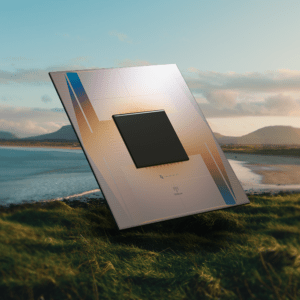 According to Google’s research team, this chip demonstrates computational capabilities that would take today’s most powerful classical supercomputers longer than the age of the universe to complete—yet the quantum system can perform comparable tasks in minutes under experimental conditions.
While such claims are carefully framed by scientists as proof-of-concept demonstrations, the implications are enormous. Quantum computing is no longer just a futuristic theory—it is rapidly evolving into a practical technology that could transform science, medicine, space research, artificial intelligence, and cybersecurity.From the world’s oldest known computer to the most advanced quantum chips, humanity’s journey of computation is entering a historic new phase.Google quantum computer
Google quantum computer Are Different From Supercomputers
To understand the importance of Google’s new quantum chip, it’s essential to first understand what a computer actually is.
At its core, a computer is a machine that:
- Takes input
- Processes it using a defined set of rules (algorithms)
- Produces output
Traditional or classical computers use bits—either 0 or 1. Even the fastest supercomputers today are limited by this binary system and by physical constraints such as heat, energy consumption, and transistor density.
Quantum computers, on the other hand, use qubits, which operate on the principles of quantum mechanics:
- Superposition (a qubit can be 0 and 1 at the same time)
- Entanglement (qubits can be linked so that one instantly affects another)
- Quantum interference (used to amplify correct solutions)
Because of these principles, quantum computers can explore vast numbers of possibilities simultaneously, making them exceptionally powerful for certain classes of problems.
From the Antikythera Mechanism to Quantum Chips
The idea of computation is not new.
In 1900, Greek divers discovered a mysterious device inside a 2,000-year-old shipwreck near the island of Antikythera. Later analysis revealed it contained at least 37 precisely interlocking bronze gears, capable of predicting solar and lunar eclipses, planetary positions, and astronomical events.
This device—now known as the Antikythera Mechanism—is widely regarded as the world’s oldest known computer.
From mechanical gears to vacuum tubes, transistors, silicon chips, supercomputers, and now quantum processors, computation has evolved continuously for over 12,000 years of human history.
What Makes Google quantum computer new Chip Special?
Google’s new quantum chip represents progress in one of the biggest challenges in quantum computing: error correction.
Quantum systems are extremely fragile. The slightest disturbance—heat, vibration, or electromagnetic noise—can destroy quantum states, a problem known as decoherence. This is the main reason quantum computers are not yet available for everyday use.
Google claims its latest chip demonstrates:
- Improved qubit stability
- Better control over quantum errors
- Scalable architecture for future quantum systems
These advances move quantum computing closer to being reliable, repeatable, and practical—the three qualities needed for real-world deployment.
Why Google Quantum Computers Look So Strange
One of the most common questions people ask is: Why do quantum computers look so different?
Google, IBM, Intel, Microsoft, and Amazon all use superconducting qubits, which require temperatures colder than outer space. This is why their quantum computers look like:
- Large golden chandeliers
- Suspended wiring structures
- Complex cryogenic systems
Meanwhile, companies like Xanadu (Canada) use photonic quantum computing, which relies on light particles (photons). These systems look entirely different because they use optical components instead of superconducting circuits.
Despite these visual differences, the goal is the same: harness quantum mechanics for computation.
What Could Quantum Computers Make Possible?
If current research succeeds, quantum computing could unlock breakthroughs once confined to science fiction:
- Drug discovery and disease eradication by simulating molecules at atomic precision
- Climate modeling with unprecedented accuracy
- Space exploration, including the search for extraterrestrial life
- Materials science, enabling ultra-light, ultra-strong materials
- Artificial intelligence leaps beyond current limits
- Cryptography, redefining global digital security
Some researchers even speculate—carefully—that quantum computing could one day help extend human lifespan or enable brain-computer interfaces. While such ideas remain theoretical, they are no longer dismissed outright.
The Biggest Roadblock: Why You Don’t Have One at Home
Despite the hype, Google quantum computer are not ready for consumer use.
Key challenges include:
- Extreme cooling requirements
- High error rates
- Massive physical infrastructure
- Enormous costs
This is why tech giants like Google, Microsoft, IBM, Amazon, and Intel are locked in a fierce global race. Whoever solves these challenges first will define the next era of technology.
What Comes Next for Google quantum computer?
With its latest quantum chip research, Google aims to:
- Scale quantum systems to thousands or millions of qubits
- Build fault-tolerant quantum computers
- Offer quantum computing via cloud platforms
- Lead fundamental scientific discovery in physics and cosmology
Rather than replacing classical computers, quantum machines will work alongside them, handling problems classical systems simply cannot solve.
The Bottom Line
Google quantum computer is not just another technology upgrade—it represents a fundamental shift in how humanity processes information.
From the ancient Antikythera Mechanism to Google’s cutting-edge quantum chip, the story of computing is one of relentless innovation. While practical, everyday quantum computers may still be years away, one thing is clear:
The quantum age has begun—and it will redefine the future of science, technology, and human civilization.
for more news