AI Is No Longer an Assistant. It’s Becoming a Co-Worker.
For years, AI answered questions. Now, it completes tasks.In offices across the world, AI systems are writing reports, sorting customer complaints, scheduling meetings, analyzing sales trends, creating presentations, and even deciding what work needs to be done next — without being told step by step.This new wave is called agentic AI — AI that can plan, act, and execute goals.Imagine telling a system:
“Prepare this week’s performance report, highlight problems, and schedule a review meeting.”
And it actually does all of it.That’s not a future demo. That’s happening now inside companies using next-gen AI software integrated into their daily workflow tools.The result? Humans are slowly shifting from doing routine work to supervising intelligent systems that do the heavy lifting.
📱 Your Phone Knows More Than You Think (In a Good Way)
Smartphones in 2026 aren’t just smarter — they’re more protective.
New devices can now:
- Blur sensitive messages if someone is looking over your shoulder
- Detect eye movement to protect privacy
- Use on-device AI so your data doesn’t always go to the cloud
- Understand your habits and pre-load apps before you open them
You don’t notice these features. That’s the point.
Technology is becoming invisible — but more powerful.
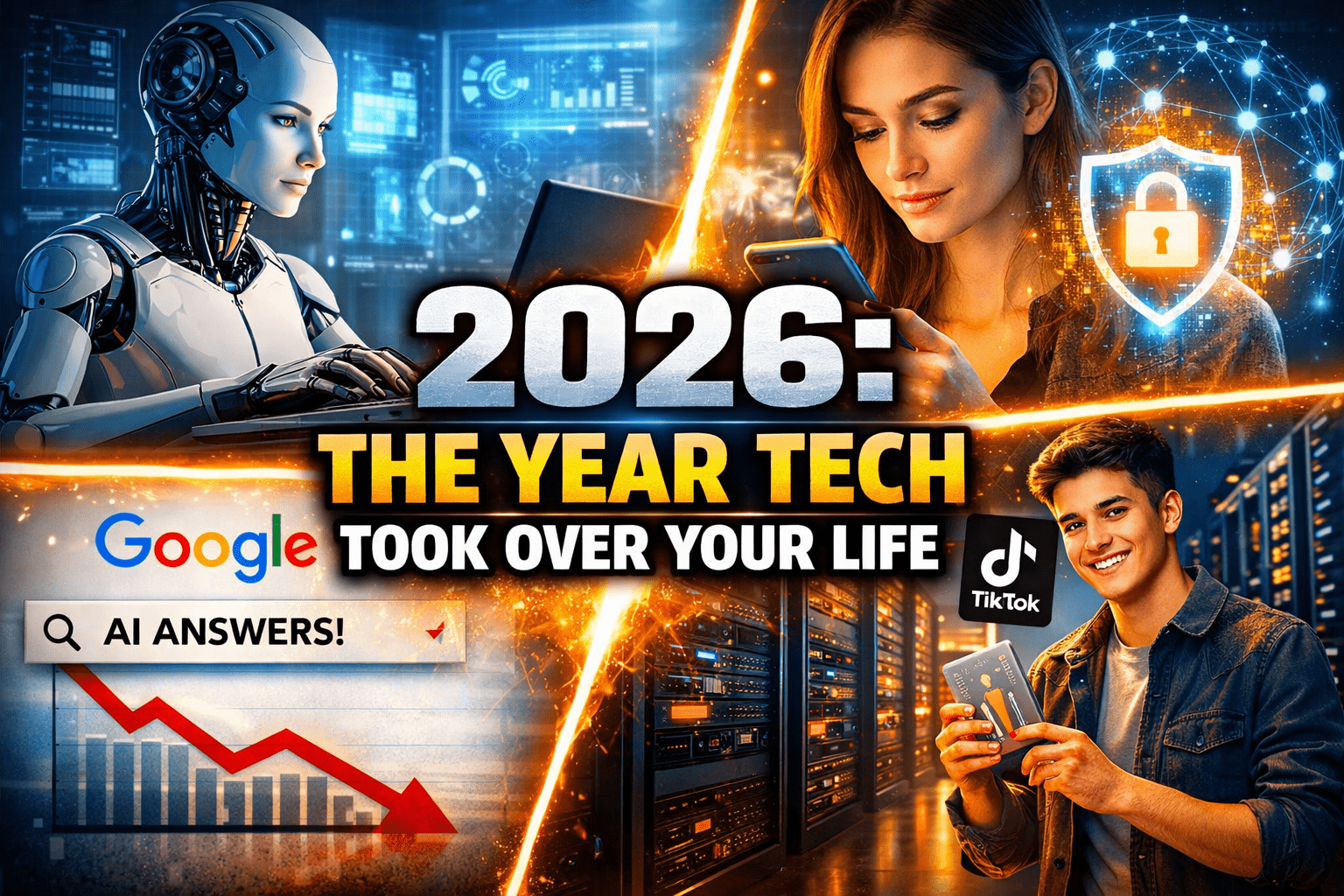
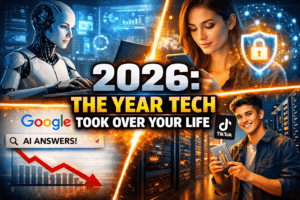
Google’s AI Answers Are Quietly Killing Website Traffic
 When you search on Google now, you often get a full AI-generated answer at the top. No need to click websites.
That means millions of sites are seeing traffic drops. Content creators, news publishers, bloggers, marketers — all are being forced to rethink how they survive when users don’t need to click.
This is being called the rise of “answer engines” instead of search engines.
Information is coming to you.
You are no longer going to it.
This single shift is rewriting the internet economy.
🎥 TikTok, Creators, and the Death of Traditional Ads
Brands spent years making polished ads. In 2026, those ads are losing to something far simpler: real people.
Research shows creator-led videos on platforms like TikTok are getting dramatically higher engagement and click-through rates than traditional brand content.
Why?
Because people trust people — not logos.
A person talking casually about a product in their bedroom is outperforming million-dollar studio campaigns.
This is forcing brands to hand the microphone to creators instead of marketing teams.
And it’s working.
🏗️ The Invisible War: AI Infrastructure
 Behind all of this is a silent race you don’t see.
Tech giants are spending billions building data centers, AI chips, cloud systems, and high-performance computing networks to power these intelligent tools.
The demand for AI hardware is so intense that memory chips and servers are getting more expensive worldwide.
This is the gold rush of 2026 — not apps, not gadgets — infrastructure.
Because whoever controls the AI infrastructure controls the future of digital services.
🌍 Governments Are Stepping In
With AI everywhere and platforms influencing billions, governments are no longer watching quietly.
Debates over data control, platform ownership, AI regulation, and digital privacy are shaping major policy decisions worldwide.
Social platforms are restructuring ownership models. AI companies are being questioned on transparency. Data storage rules are tightening.
The message from regulators is clear:
Innovation is welcome. Unchecked power is not.
🧠 The Job Market Is Quietly Transforming
Here’s the part people argue about the most: jobs.
Is AI-tech replacing humans?
The reality is more subtle.
AI-tech is replacing tasks, not entire jobs.
Repetitive work — data entry, report formatting, basic analysis — is being automated. But human roles are shifting toward creativity, decision-making, and oversight.
The most valuable skill in 2026 is not coding.
It’s knowing how to work with AI-tech .
Schools, colleges, and companies are now training people in AI literacy as a core skill, like computer literacy was 20 years ago.
🏠 Tech at Home Feels… Human
From smart wearables tracking health with medical-grade accuracy to home devices that understand routines, consumer tech is becoming deeply personal.
Your devices now:
- Learn your sleep patterns
- Suggest health improvements
- Adjust environments automatically
- Personalize experiences without you asking
It feels less like using machines and more like living with intelligent assistants.
⚠️ The Big Shift Nobody Talks About
Here’s the uncomfortable truth:
Technology in 2026 is no longer loud and exciting.
It’s quiet and deeply embedded.
And that’s why this year is historic.
Because the biggest tech revolution isn’t happening in headlines — it’s happening in habits.
You are adapting to AI without realizing it.
You are trusting algorithms without noticing.
You are living in a world where technology is no longer a tool you pick up — it’s an environment you exist inside.
🚀 What This Means for the Future
We are entering a phase where:
- AI works alongside humans daily
- Devices protect and predict instead of just respond
- Platforms are being reshaped by policy and trust
- Infrastructure is the real battleground
- Digital experiences are becoming more human than mechanical
2026 will be remembered as the year technology stopped asking for attention…
…and started quietly running the background of our lives.
And the wildest part?
Most people think nothing has changed.
That’s how you know everything has.
for more news