
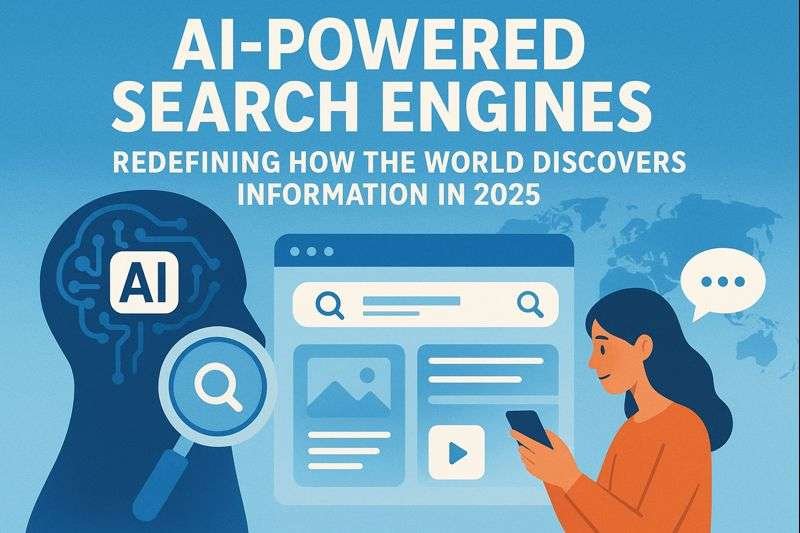
AI-powered search engines are redefining how the world discovers information in 2025, from visual search to conversational AI.
Here’s how this global shift is unfolding How AI Is Changing the Way the World Searches for Information in 2025
In 2025, a quiet but powerful revolution unfolded across the digital world. The way we search for information—something billions of people do every day—has transformed more dramatically than at any point since the birth of the internet. Search engines, once simple tools that matched keywords to webpages, have evolved into intelligent systems that understand context, intention, and emotion. Today, it feels less like typing into a box and more like having a real conversation.
This seismic shift has pushed artificial intelligence to the center of global digital culture. It’s influencing how we learn, work, shop, and make decisions. And as worldwide curiosity rises to new heights, AI-powered search has become one of the most discussed and searched-about topics of 2025.
AI: The New Face of Search
For decades, traditional search engines relied heavily on keywords. You typed a word or phrase, and the algorithm matched it with indexed content. But in 2025, this familiar model has evolved into something far more dynamic.
AI-driven search engines now deliver answers that feel personalized, conversational, and almost intuitive. They don’t just respond—they interpret. They understand incomplete sentences, complex questions, and even vague intentions. This new generation of search anticipates what users mean, not just what they type.
One of the biggest leaps this year has been the explosive growth of visual search. Global usage is up more than 70%, with millions of people preferring to point their camera at an object rather than type a question. Whether identifying a plant, checking prices of a pair of sneakers, or translating a street sign, visual search has made the world instantly clickable.
India has become one of the biggest contributors to this trend. With the widespread use of AI-powered mobile tools, Indian users now top global charts for visual searches—reflecting a shift toward faster, more intuitive discovery.
Supporting this evolution is the rise of conversational search modes. Instead of one-line queries, users now engage in back-and-forth dialogue with AI, refining their search through natural conversation. This conversational flow is redefining how information is accessed, making the process smoother and more human like.
What the World Is Searching For AI
The 2025 Year in Search data reveals just how dramatically global curiosity has shifted.
Entertainment, sports, and politics still dominate top results—but the real surge comes from searches related to artificial intelligence. Terms like AI chatbots, Gemini, AI tools, and AI prompts consistently rank among the most-searched topics around the world.
In India, cultural passions remain strong—cricket continues its reign at the top with IPL, the Women’s World Cup, and player-specific queries driving massive search traffic. But alongside these traditional favorites, AI-related terms have exploded in popularity. Searches for things like Gemini prompts, AI video generators, and even quirky tech like the Nano Banana Pro are among the fastest growing.
This blend of entertainment, sports, and futuristic technology shows a deeper shift: people aren’t just searching for information—they’re seeking understanding. They want AI to help them analyze, compare, explain, and even create. The world is moving from passive consumption to interactive discovery.
Real People, Real Impact
Behind every online search is a real human need—and in 2025, AI-powered search is transforming lives in ways that feel deeply personal.
Priya, an architecture student in Mumbai, describes the change vividly.
“Earlier, I would type five or six different queries before finding something useful,” she says. “Now I just explain my design problem in one sentence, and AI gives me examples, sketches, and even code. It feels like having a personal mentor available 24/7.”
In Nairobi, James, a small business owner, says conversational search is helping him make smarter decisions.
“I ask about marketing trends or price strategies and the AI gives me structured advice,” he explains. “It’s like talking to a consultant—but free.”
Experts say stories like these are becoming increasingly common. Students, creators, professionals, and entrepreneurs are turning to AI-powered search as a guide, problem solver, tutor, and creative partner. For many, it’s becoming an essential part of everyday life.
The Debate: Progress or Privacy Risk?
Despite the excitement, AI-powered search also comes with concerns.
The biggest debate of 2025 revolves around data privacy. The more intelligent search becomes, the more personal information it seems to require. Privacy advocates warn that while AI can deliver better results, it can also track user behavior more deeply than ever before.
There’s also concern about over-dependence on AI. Experts worry that people may stop exploring multiple viewpoints and instead rely on whatever answer AI gives first. Some educators say it could weaken critical thinking if users treat AI’s responses as final and unquestionable.
Analysts predict that AI search engines will soon offer:
-
Real-time summaries of breaking news
-
Personalized travel plans within seconds
-
AI-generated cooking recipes based on what’s in your fridge
-
Emotion-aware search that adapts to your tone
-
Ultra-precise academic explanations tailored to your learning style
The future of search isn’t just about finding answers—it’s about shaping them.
The rise of AI-powered search marks a fundamental shift in how humanity interacts with information. It’s no longer simply about typing questions into a box; it’s about engaging with a system that understands, responds, and adapts.
For students, professionals, creators, and dreamers alike, search engines are becoming more than tools—they’re becoming partners in thinking and discovering.
In 2025, the world didn’t just search more. It searched smarter.
And as this transformation continues, one thing is clear: human curiosity has never been more powerful.
FOR more news –