
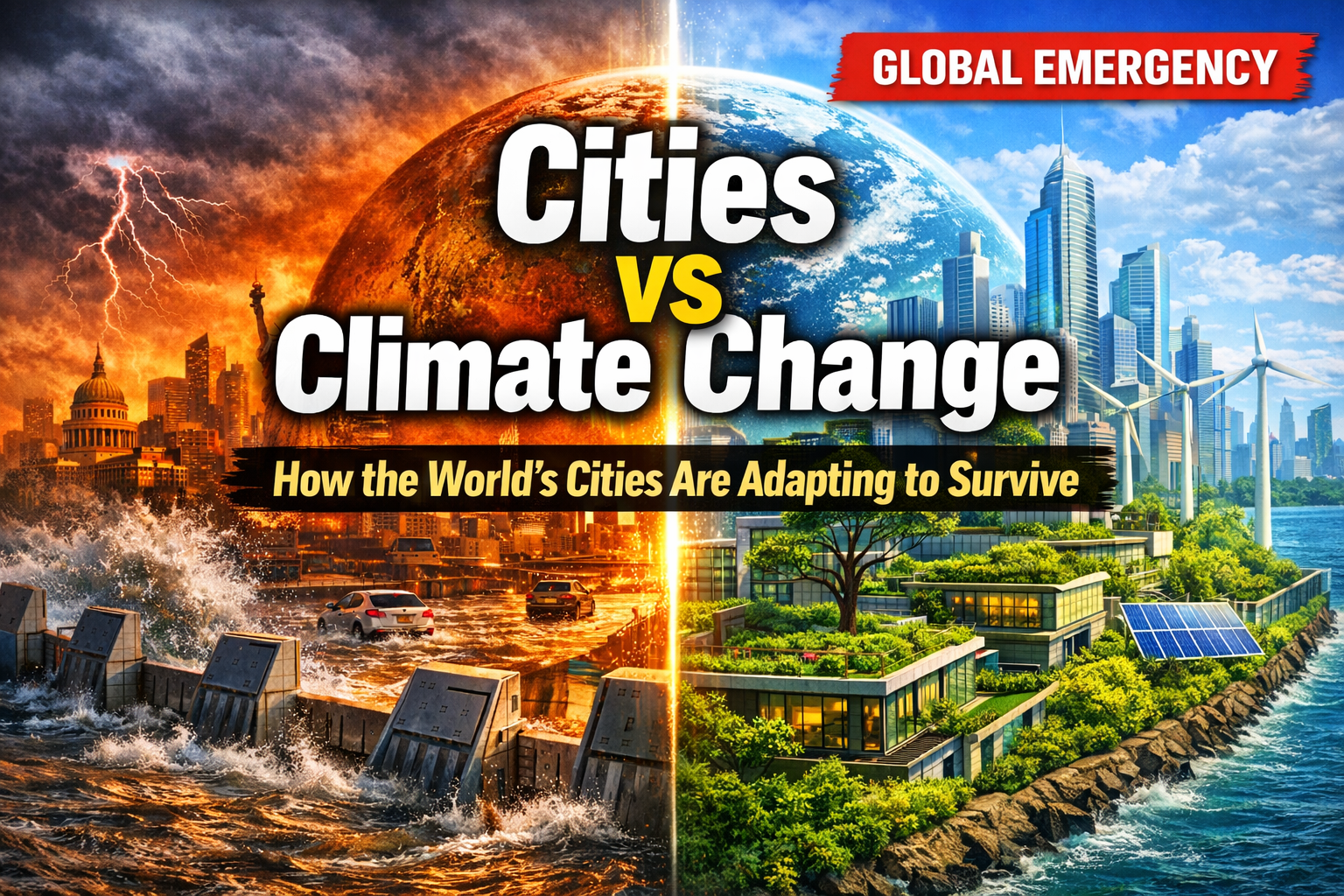
A World on the Move: How Cities Across the Globe Are Adapting to a Rapidly Changing Climate
Cities have always told the story of human progress. From ancient river-based settlements to today’s digitally connected megacities, urban spaces evolve alongside civilization. Now, they are entering a new chapter—one shaped by climate change. What was once considered a future risk has become an everyday challenge, pushing cities across the world to adapt faster than ever before.
Extreme weather events are no longer rare occurrences. Prolonged heatwaves, unexpected floods, powerful storms, and rising sea levels are making headlines with alarming frequency. From New York to Mumbai, Lagos to London, city leaders are being forced to rethink how urban areas are designed, built, and protected. Climate adaptation is no longer optional—it is essential for survival.
Cooling Cities in a Warming World
One of the most immediate threats cities face is rising temperatures. Urban heat islands, created by concrete structures and limited green cover, are making cities significantly warmer than surrounding rural areas. In response, many governments are turning to nature-based solutions.
Green roofs, urban forests, vertical gardens, and shaded public spaces are being introduced not just for beauty, but for health and safety. Trees lower surface temperatures, improve air quality, and create more livable neighborhoods. Cities such as Singapore, Medellín, and Copenhagen are gaining global attention for blending greenery with urban growth—proving sustainability and development can go hand in hand.
world Rethinking Water and Flood Management
Flooding has emerged as one of the most destructive climate-related risks for cities. Aging drainage systems are struggling to cope with sudden heavy rainfall, causing damage to homes, roads, and businesses. To address this, urban planners are embracing smarter, more flexible solutions.
Permeable pavements, rainwater harvesting systems, and restored wetlands allow water to be absorbed naturally instead of overwhelming drains. Some cities are even redesigning rivers, removing concrete barriers to give waterways more room to flow. These approaches not only reduce flood risks but also help revive ecosystems and improve urban biodiversity.
Coastal Cities on the Frontline
For coastal cities, the challenges are even more complex. Rising sea levels threaten millions of residents living near shorelines. Cities like Jakarta, Miami, and Venice are already experiencing the consequences—frequent flooding, land subsidence, and saltwater intrusion.
To counter this, some cities are constructing sea walls and storm surge barriers, while others are adopting long-term adaptive designs. Elevated buildings, floating homes, and flood-resilient neighborhoods are becoming realistic solutions rather than futuristic ideas. Urban architecture is evolving to live with water instead of fighting against it.
Building Social Resilience, Not Just Infrastructure
Climate change impacts communities unevenly. Low-income populations often live in the most vulnerable areas and have fewer resources to recover after disasters. Recognizing this, city governments and global organizations are placing greater emphasis on social resilience.
Inclusive urban planning, early warning systems, emergency shelters, and climate awareness programs are helping protect the most vulnerable residents. The focus is shifting from infrastructure alone to people-centered solutions—ensuring no community is left behind in the climate response.
The Role of Smart Technology
Technology is transforming how cities respond to climate challenges. Smart sensors and data-driven systems are enabling real-time monitoring of air quality, water levels, and energy use. These tools help authorities predict risks, respond faster to emergencies, and plan more effectively.
From AI-powered weather forecasting to smart grids that optimize energy consumption, technology is helping cities move from reactive crisis management to proactive climate planning—saving both lives and resources.
Cutting Emissions While Adapting
While adaptation is critical, cities are also tackling the root of the problem. Urban areas account for a large share of global carbon emissions, making them key players in climate mitigation.
Many cities are investing in renewable energy, electric public transport, cycling infrastructure, and energy-efficient buildings. Cleaner mobility options and sustainable housing projects are becoming central to long-term urban development strategies, helping cities reduce emissions while improving quality of life.
A Global Effort with Local Solutions
What makes this global transformation remarkable is the level of collaboration. Cities are sharing ideas, data, and successful models across borders. International networks of mayors and urban planners are proving that climate solutions developed locally can inspire global change.
Despite the scale of the challenge, there is cautious optimism. History shows that cities are resilient, innovative, and capable of reinvention. The changes taking place today suggest a future where urban life is more sustainable, inclusive, and prepared for the realities of a changing climate.
The journey ahead will require strong leadership, long-term investment, and collective responsibility. But as cities reshape their streets, buildings, and communities, they are sending a powerful message to the world: while climate change is a global crisis, the solutions can begin right where people live—at the city level.
for more news