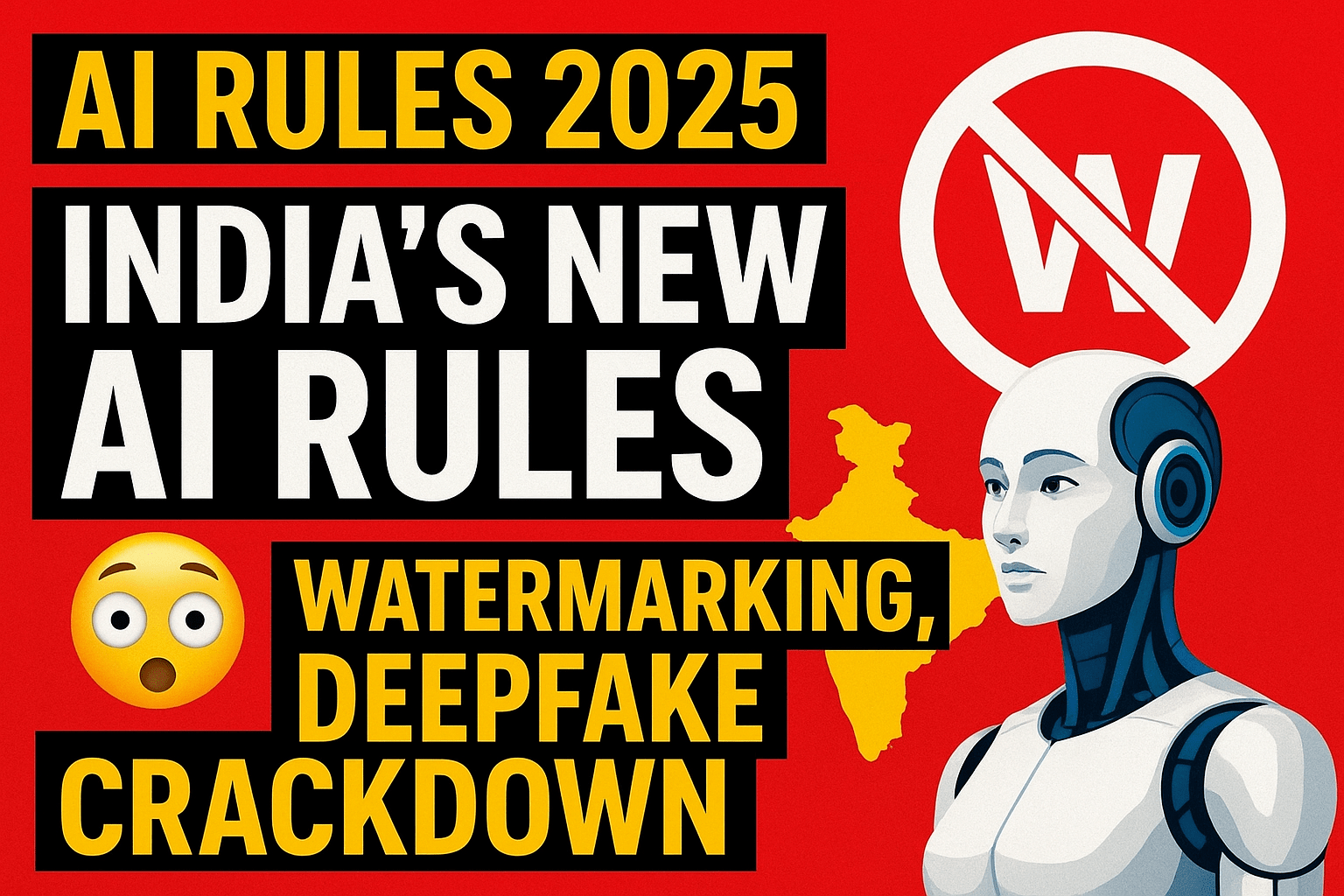
India’s New AI Rules introduces mandatory watermarking for AI content to fight deepfakes. Here’s how the new 2025 AI rules will impact creators, businesses, and users.
The Indian internet is about to go through its biggest shake-up in years — and if you use Instagram, YouTube, WhatsApp, or even AI tools like ChatGPT or Midjourney, this decision will directly impact you.
The government has officially rolled out a new AI guideline that demands two things from every creator, influencer, tech company, and AI platform:
✅ Mandatory watermarking for all AI-generated content
✅ Full transparency whenever content is AI-assisted or AI-modified
This may sound like a small step, but experts say it could change the way India sees digital content forever.
India’s New AI Rules-What Exactly Happened?
The Ministry of Electronics & IT (MeitY) has issued a fresh guideline to tackle the growing wave of deepfakes, synthetic audio, manipulated videos, and AI-enhanced misinformation.
Under this rule:
-
Any content created with AI tools must carry a visible or invisible watermark
-
Creators and companies must clearly disclose when content is AI-generated
-
Platforms will be responsible for ensuring compliance
-
Violations may attract significant penalties and takedowns
The government says the goal is simple:
“Make the digital world safer, more transparent, and accountable.”
India’s New AI Rules-Why Does This Matter?
Because the internet is drowning in AI content — and most people can’t tell what’s real anymore.
A recent internal audit found something shocking:
Over 70% of viral videos in 2025 had some form of AI editing or enhancement.
Yes, more than two-thirds of the content going viral wasn’t 100% real.
From celebrity deepfake speeches to AI-generated political statements to copied influencer voices — this trend has shaken public trust.
India’s new rule aims to stop misinformation at its source, especially with elections, banking frauds, and fake news incidents rising.
But there’s another side to it…
How This Rule Will Affect Everyday Internet Users
Even if you’re not a creator, the change will still impact your daily scrolling.
1. You’ll know what’s AI-made and what’s real
Every AI video, AI image, AI music clip, or AI-generated article will need to carry a tag like:
“AI Generated”
“AI Edited”
“Synthetic Media”
“Created using Generative AI”
Finally — no more guessing if a viral clip is real or not.
2. Deepfake crimes could drop
Scams using AI voices, fake bank calls, political misinformation, and morphed videos may finally slow down.
3. Ads will become more honest
Influencers who secretly use AI to enhance skin, body shape, voice, or background will now have to disclose the truth.
Who Is Affected by This Rule?
→ Creators & Influencers
Any reel, short, or post using AI filters, AI voices, AI editing, or AI-generated scripts must follow the rule.
If not, platforms can take down content or demonetize accounts.→ Businesses & Brands
Companies running AI-generated product videos or ads without tagging them will face penalties.
→ AI Companies & Developers
Platforms like ChatGPT, Gemini, Midjourney, Runway, Rephrase.ai, and Indian AI startups must integrate watermarking in their outputs.
→ You — the viewer
Your feed will slowly become more transparent and trustworthy.
India’s New AI Rules-Will This Kill Creativity?
Not exactly.
Creators fear that watermarking may:
Reduce artistic freedom
Expose behind-the-scenes editing
Affect audience perception
Hit engagement and brand deals
But digital experts argue:
“Transparency builds trust. And trust builds long-term audience loyalty.”
In short — AI won’t stop, but the internet will become more honest.
India’s new AI rule may be controversial, but one thing is clear:
The era of “AI without accountability” is officially over.
The internet is changing — and very soon, you will know exactly what’s real, what’s fake, and what’s made by AI.
If implemented right, this could be the biggest step toward a safer, cleaner, and more trustworthy digital India.
for more- news